On 14 May 2026, the Europe Without Barriers think tank, a long-term ICMPD partner in Ukraine, convened a roundtable discussion entitled “From Vision to Tangible Results: Five Years of Ukraine’s Integrated Border Management Strategy” to review the achievements of the first IBM strategic cycle and discuss priorities for the future.
The event brought together representatives of government institutions, international organisations, parliament, and the expert community to assess both the achievements and challenges that have shaped the implementation of Ukraine’s Integrated Border Management (IBM) Strategy over the past five years.
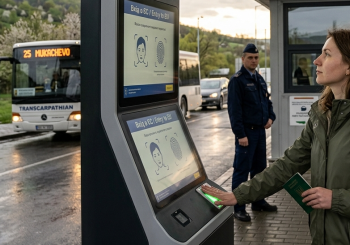
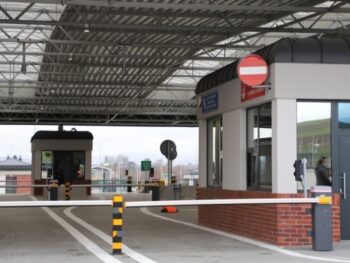
During this period, Ukraine has moved from the concept of integrated border management to its practical implementation. Despite the full-scale war and significant resource constraints, the country has strengthened interagency coordination, established the National Coordination Centre for Integrated Border Management within the Ministry of Internal Affairs’ Situation Centre, developed digital and analytical tools for managing cross-border movements, continued modernising border crossing points and infrastructure, and aligned risk management approaches more closely with European Union standards.
Participants highlighted interagency cooperation as one of the most significant achievements of the first Strategy. At the same time, they stressed the need to further strengthen coordination mechanisms, as certain institutional constraints continue to affect the effectiveness of joint efforts.
Ivanna Klympush-Tsintsadze, Chair of the Verkhovna Rada Committee on Ukraine’s Integration into the EU, underscored the importance of an objective assessment of the results: “We need to speak very honestly about the results, and we have much to be proud of. But we must also speak very honestly about our failures. Not to beat ourselves up, but to draw the right conclusions and take them into account in the future.”
One of the key topics of discussion was the development of a new Integrated Border Management Strategy. According to participants, the revised draft has already been submitted to the National Security and Defence Council of Ukraine for consideration, incorporating recommendations from international partners and lessons learned during the previous strategic cycle.
The new Strategy is being developed as Ukraine advances its preparations for accession to the European Union. In this context, integrated border management plays a particularly important role in meeting the requirements of the Schengen acquis and supporting the broader EU accession process.
Participants also discussed the work of the interagency group responsible for preparing the Schengen Action Plan, as well as further steps required to align Ukraine’s border management system with European standards.
Representatives of international organisations, including ICMPD, IOM and the EU Advisory Mission, reaffirmed their commitment to supporting Ukraine in implementing the next strategic cycle and advancing its European integration agenda.
“We were involved from the outset in the development of the Ukrainian Integrated Border Management Strategy and continued to provide expert, advisory, and logistical support for its implementation. We also supported the State Border Guard Service of Ukraine and other participants in developing the new Strategy last year and are now supporting the work on creating a Schengen governance system in Ukraine,” said Vyacheslav Toporov, EU4IBM-Resilience Project Manager.
Participants agreed that the next phase of integrated border management reform should be built around three key pillars: effective interagency coordination, strong institutional and analytical capacity, and the continued alignment of Ukrainian practices with European Union standards.
For the EU4IBM-Resilience project, the results of the first IBM Strategy cycle demonstrate that sustained coordination, analytical support and interagency cooperation can deliver tangible results even under wartime conditions. These areas will remain central to supporting Ukraine’s continued border management reform and progress towards European integration.