The EU4IBM-Resilience project, implemented by the International Centre for Migration Policy Development (ICMPD) with financial support from the European Union, aims to strengthen Ukraine’s integrated border management in the context of the war and the country’s accession to the EU. The initiative supports Ukraine’s border and customs agencies by developing professional capacity among staff, modernising technology, and improving border management procedures.
As the project enters its final stage, it is crucial to evaluate its practical outcomes, considering not only individual activities but also the broader changes already influencing the daily operations of border services. It is important to understand which solutions are now part of everyday border control and how they help make the system more efficient, secure and resilient.
Here below Vyacheslav Toporov, the EU4IBM-Resilience project manager, summarises the initiative’s implementation and analyses its key results. The discussion focuses on practical changes already implemented, the approaches now used in day-to-day operations, and the areas that will require further support.
What new approaches and practices has the project introduced to border management, and will these be maintained in the long term?
At ICMPD, we believe that effective border management and security cannot simply be ‘imported’. The biggest mistake is thinking that one can easily copy a system from one country or group of countries and implement it elsewhere. We do bring in global best practices and draw on our experience in various countries and with different agencies; we also align ourselves with EU norms and standards, as Ukraine seeks to integrate into this space. However, the final product must grow within the local environment. If people do not feel a sense of ownership of these processes, the changes will not be sustainable.
We are here to offer advice and work alongside border guards, customs officers and migration officials to drive sustainable change together.
It should be noted that our partners are not interested in simply receiving ready-made solutions from outside, however appealing these may seem at first. They take responsibility and show leadership themselves, so our role is to provide support, access to knowledge and recommendations, tools and opportunities.
Ukraine is a unique case, combining the resolute stand against the aggressor, the desire to join the European family, the need to be swift and flexible, and the requirement to maintain security and stability in extremely challenging conditions. However, there are also factors that can hold the country back, such as institutional inertia or corruption. At the end of the day, investing in people is the most challenging yet the most rewarding long-term strategy.
Many believe that project ‘funding’ and ‘investment’ simply mean purchasing expensive scanners or other equipment. Yet technology is only as good as the professional who uses it. This is why we place strong emphasis on building human capacity. We provide specialised training programmes, conduct training sessions and train-the-trainer workshops, and create a pool of specialists within the agencies who can pass on their knowledge.
We use equipment as a catalyst for change – not just to procure gear, but to transform the environment. We also help agencies formalise updated processes within their standard operating procedures, turning newly acquired skills into a long-term institutional habit rather than a one-off outcome.
We believe that border services should be professional and people-centred, with security measures based on data. By strengthening staff skills, we help counter criminal activity while promoting safe travel and trade. This contributes to the stability of Ukraine’s borders with the EU and Moldova.
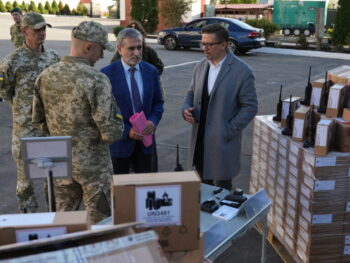
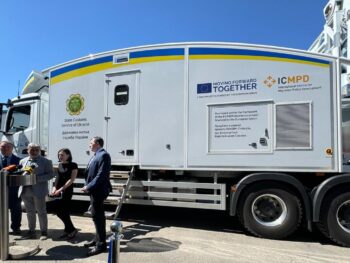
Border officers must be vigilant enough to stop offenders, yet professional enough to treat every traveller or carrier with dignity. This supports Ukraine’s move towards the culture of ‘smart security’ rather than ‘hard security’, even in wartime. Much remains to be done, and the human factor inevitably plays a key role here, but I believe that our project has contributed to this positive progress.
Which changes and capabilities can the agencies sustain independently, and where could risks appear without donor support?
Our approach is centred on creating conditions that allow our partners to use the our joint achievements independently in the future. This is precisely why we prioritise training. For example, our aim is not only to teach people how to use the equipment, but also how to maintain it and keep it in operating condition for as long as possible.
Border agencies’ budgets often cannot cover all essential needs. Where possible, we secured extended manufacturer warranties to partially mitigate future costs. Since the project was extended several times, we also arranged repairs for some equipment purchased at the start of the project whose warranty had expired.
As for ‘soft’ support, such as knowledge, expertise and procedures, it naturally remains with our partners and helps them develop further. We also organise training for trainers and facilitate horizontal exchanges of knowledge and practices through regular thematic meetings, contributing to communities of practice and sustained peer learning.

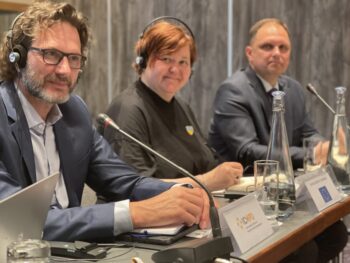
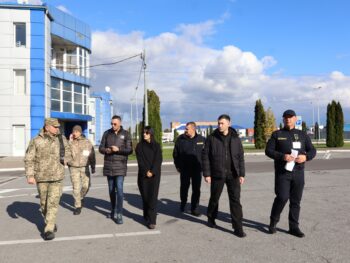
The project also contributed significantly to the Integrated Border Management Strategy, certain legislation, programmes and action plans. Our analytical findings and recommendations are thus embedded in documents that will guide future sector development. The project further works on Ukraine’s strategic priorities, including the development of a Schengen governance system, thus continuing to build a lasting legacy for our partners.
Regarding future technical and infrastructural border support, the needs remain significant. However, our partners’ capabilities are visibly maturing each year as they move toward greater self-sustainability. This progress is driven largely by technical assistance initiatives, including EU4IBM-Resilience. At the same time, this improvement also reflects a broader natural evolution within the public sector, and integrated border management is no exception in this regard.
How has the border-crossing process been transformed, and what would the daily reality look like for users if these changes were rolled back?
When Ukraine’s Black Sea ports were blocked by the aggressor, land borders became the country’s economic lifeline. The EU4IBM-Resilience project, funded by the European Union, invested around €8 million to ensure this route remained open and operational.
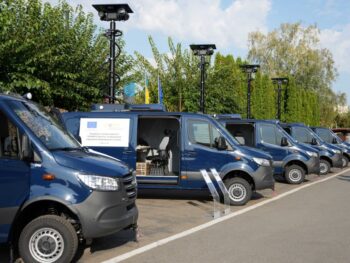
We contributed to building an ecosystem of non-intrusive control by deploying mobile scanners at three major border crossing points – Chop, Yahodyn and Krakivets – to enable rapid, zero-contact inspections. Three similar scanners, installed by another project, were based on our approach. We provided seven-day training courses for operators and image analysis specialists, as well as a five-day maintenance training course delivered by the manufacturer. We hope this will help keep the equipment in good working order for much longer.
We also installed ten automated weighing systems with number plate recognition to speed up data processing and enable real-time analysis.
Power outages caused by attacks on Ukraine’s energy infrastructure presented another challenge for this ecosystem. To prevent scanning disruptions, we installed uninterruptible power supplies on seven stationary scanners. These allow the scanners to switch safely to generators, saving around 30 minutes of downtime at each power cut.
We also carried out a comprehensive assessment of the older stationary scanners at the border to identify future needs and necessary upgrades. Some immediate improvements to image quality were delivered on-site by project experts, with detailed reports and methodology for the further modernisation of these systems provided as well.
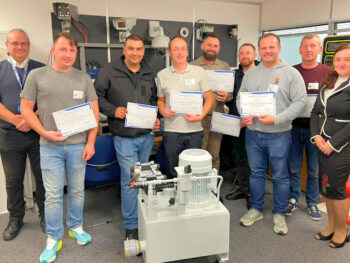
The initiative culminated in a specialized ‘Train-the-Trainers’ program, capping a comprehensive series on the analysis and interpretation of scanner imagery. While over 80 customs officers benefited from practical workshops and knowledge-sharing, this final phase ensures long-term sustainability by empowering local experts to lead future instruction independently.
Recognizing that 100% cargo scanning is neither realistic nor effective, we prioritized the strengthening of risk analysis. Through a series of online and offline seminars, we refined profiling methods to better identify high-risk consignments and enable more accurate selection for in-depth inspection.
Our comprehensive approach sought to modernize operational logic, boosting efficiency and accelerating border crossings for legitimate trade – a critical necessity given the surge in volumes of trade across land borders and the ongoing pressures of war. By transitioning toward a more technological, risk-oriented model, the project actively contributes to transforming border operations alongside the broader innovations led by our partners and the international community.
Without these tools and expertise, inspectors would be forced to revert to manual, routine processes, inevitably leading to operational bottlenecks. For carriers and passengers, this would mean significant delays and less predictable procedures. These outcomes underscore that our contributions were not merely isolated fixes, but the foundation of a sustainable system that has genuinely improved the functioning of the entire border.
Did the project introduce lasting innovations that continue to work ‘on their own’, regardless of official regulations or availability of funding?
Without delving into the specifics of the numerous cutting-edge technologies or modern methodologies we introduced to our partners’ work, I would like to highlight two examples.
First, the project introduced an innovative approach to the analysis and restructuring of work processes. Unlike the conventional LEAN strategy that centres on enhancing a process by those directly involved in it, the project utilised a range of expertise from different sectors, to provide a holistic perspective, systematically assess processes, and identify more effective solutions. The war put on hold many proposals, but a lot of our recommendations are still relevant and are being gradually adopted by the agencies.
Second, even without formal sign-off, staff began applying new proposed practices in their daily work. This demonstrates the project’s real value as it confirms that our ideas are not just theoretical. This organic adoption also underscores the power of the ‘bottom-up’ approach and people’s willingness to take responsibility.
We believe that the changes we worked on, and continue to assist, will yield their most significant results over time. After all, it is not just about isolated improvements, although we do pay attention to them as well. First and foremost, it is about systemic transformation. This involves not only supplying state-of-the-art equipment and developing specific skills but also changing approaches. Such changes take time.
Which project outcome gave the team the biggest sense of satisfaction?
One of the outcomes that made us happiest was supplying physical rehabilitation equipment to border guards wounded while defending Ukraine against the Russian invasion. Between late 2023 and early 2024, we helped supply three State Border Guard Service medical facilities with specialised equipment designed to support treatment and post-therapeutic rehabilitation. The exoskeleton provided to rehabilitation specialists, for example, helps improve mobility for people with traumatic brain or spinal cord injuries, as well as for those with muscular dystrophy. The kinesitherapy machine includes various accessories and offers a wide range of exercises that strengthen muscles and improve flexibility. Adjustable rehabilitation stairs help patients practise walking, improve their balance, and build strength in their lower limbs. A dynamic standing frame makes it easier for patients to walk independently and reduces their reliance on assistance from others. The donated equipment was supplemented with cryotherapy devices to help reduce pain and minimise areas of damage.
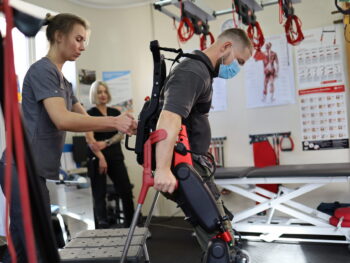
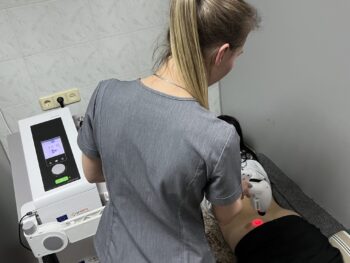
Training sessions for State Border Guard Service rehabilitation specialists accompanied each delivery, enabling them to use the equipment to its full potential. Altogether, the delivered equipment helped provide more personalised and high-quality rehabilitation, ensuring a full recovery cycle for the wounded.
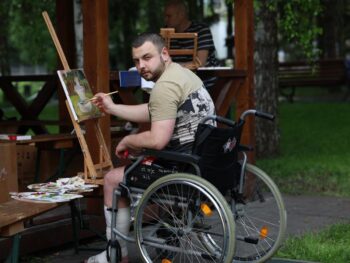
Furthermore, in 2025, we supported a series of psychological rehabilitation sessions for State Border Guard Service personnel. Between August and February, our partner non-governmental organisation, the ‘Centre for Veterans’ Mental Recovery’, conducted 48 rehabilitation sessions offering four types of therapeutic activity. The project funded major expenses such as materials, professional services, transport, meals for participants, and communication support. This provided veterans and military personnel undergoing rehabilitation with access to a high-quality therapeutic experience, fostering creativity, skill development, and emotional well-being.
The tangible outcomes of art therapy also enable exhibitions and public awareness and outreach activities to be organised, raising awareness of the challenges and issues surrounding mental recovery in the long term and fostering understanding and support from the community. It is planned to provide additional support for at least 24 sessions over the coming months.
Supporting reforms and systemic transformations that affect life on the border and the country as a whole is important, and the progress made is highly satisfying and makes one feel involved in significant nationwide changes. However, these kinds of activities, which directly impact people, help Ukraine’s defenders to recover or return to normal life, bring genuine joy and are a source of great comfort for the project team.
What story or situation from this project stands out most in your memory, and what challenges did you face?
Throughout the project, we encountered various situations, including positive moments as well as challenges. Most of these were entirely predictable, so we mitigated risks and found alternative solutions in advance. At the same time, some situations took us by surprise.
One example of a challenging situation was the installation of weighing systems for freight transport at border crossing points. From technical aspects and questions of optimal placement to liaising with all stakeholders, it was not an easy task. The process was complicated by many factors, including road conditions, limited space at border crossing points and the need for the systems to function correctly for various types of vehicles. The positive and negative impact of the human factor is also difficult to overstate. The project team had to step in and find solutions in areas where their involvement is not usually required. Ultimately, however, all these issues were successfully resolved, and the weighing systems began operating effectively, becoming an integral part of daily border controls.
Today, customs officers can work effectively with the various technical customs control systems, including the scanners and weighing systems we supplied. They can independently assess the condition of these systems and resolve minor issues, as well as share their knowledge with colleagues. Overall, customs control evolved into a more modern and technologically advanced process that aligns more closely with European standards. Basic operational work has become self-sufficient to a certain extent, and processes are maintained at a satisfactory level even without constant external support. We can say that a whole chain of efficiency has been established which will continue to function even after the project’s completion: the modern equipment will continue to fulfil its function, the knowledge will remain within the team, the awareness and connections will help develop further on. For our part, we gained invaluable experience and strengthened relationships that help us work more effectively on a wide range of issues.
But overall, what distinguished this project most was its extraordinary pace – how rapidly the reality, needs and requirements changed, and also how fast we adapted and responded. This was never more evident than at the outbreak of the war, as the country grappled with a new wartime reality. Large numbers of people were crossing borders to find safety, and critical imports were competing with exports vital to the economy. We take immense pride in having supported the country through such a pivotal and challenging period.
What are the prospects for continuing the EU4IBM-Resilience project? What plans does the project team have to further strengthen the capacity and capabilities of the Ukrainian border and the services operating there?
The activities implemented by the project lay the foundations for work far beyond its current cycle, which runs until August 2026. This work is gaining clearer momentum, as effective border management is a direct requirement for Ukraine’s accession to the EU.
ICMPD’s strategy focuses on achieving sustainable results. Furthermore, we view the period beginning in 2026 as a new phase of profound institutional transformation where the focus shifts from emergency response to fully integrating the Ukrainian border system with European standards.
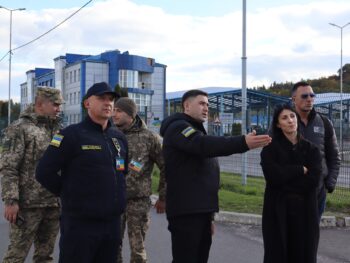

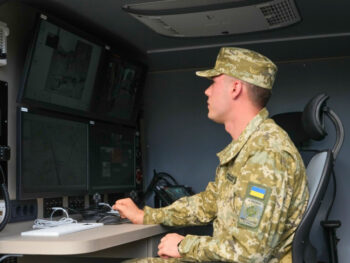
On the western border, we are shifting our focus towards full harmonisation with Schengen rules, introducing joint border control and automating processes even further, particularly through the use of artificial intelligence.
At the same time, significant attention will be given to human capital and personnel resilience. We try to mobilise support for rehabilitation of border guards through modern equipment and access to psychological support. An important part of our approach is also the reform of personnel management within the State Border Guard Service, where we aim to help the service transition to a modern model in which career advancement and remuneration will depend on actual performance.
Transparency and technological advancement will also remain key focuses. We are laying the groundwork for new anti-corruption initiatives for the period 2026–2028, focusing particularly on practical implementation of measures and adoption of fundamental principles at local level. We also look forward to further digitalisation of operations, increased use of body cameras, and automation of internal controls.
All these efforts – from technical maintenance of scanners to training of mid-level managers – aim to ensure that the Ukrainian border becomes less of a barrier and more of a modern, technologically advanced and transparent system that fully complies with European Union standards. We believe that our experience and strong ties enable us to implement these plans effectively, creating an efficient system that will function for many years to come.
At the same time, we recognise critical challenges: complex equipment maintenance, modernisation and regular staff training call for significant additional resources, and without donor support, there is a real risk of lower efficiency and operational delays.
The primary risk, however, is the inability to scale up. While Ukraine is capable of maintaining existing systems independently, ongoing military aggression creates competing high-level priorities. Consequently, rapid procurement of new, high-cost equipment or development of complex software ‘from scratch’ may be significantly delayed. It is equally important to support the development of legislation, updating procedures and processes, and training personnel.
Despite the challenges, we are optimistic about the future. Each successfully implemented measure represents not only a technical achievement, but also a tangible step towards Ukraine’s integration into the European family. We witness the incredible resilience and dedication of Ukrainian border guards and customs officers daily, as they demonstrate their readiness for change even under the most difficult conditions. The combination of ICMPD’s international expertise and the unwavering determination of our partners gives us confidence that the border of the future will be secure, transparent, and as convenient as possible for people. We are proud to be part of this historic process, and we are convinced that through our joint efforts, we will establish one of the world’s most advanced border management systems.
Despite the challenges, we remain profoundly optimistic. Every successfully implemented measure is more than a technical milestone; it is a tangible stride toward Ukraine’s integration into the European family. Witnessing the resilience and dedication of Ukrainian border guards and customs officers daily, we see their readiness for reform even in the face of adversity. The synergy between ICMPD’s international expertise and our partners’ unwavering resolve gives us confidence that the border of the future will be secure, transparent, and user-centric. We are proud to contribute to this historic transformation and convinced that our joint efforts are building one of the world’s most advanced border management systems.